
Poco
Send in the clowns

I needed some reprieve from the overly punishing world of Hollow Knight: Silksong and found myself with a couple hours to spare a few Saturdays ago to bask in the calm of a point and click adventure game called Poco. Point and click adventure games are a dime a dozen with varying levels of quality but Poco had been gaining popularity as it is a student-made game that was released for free on Steam. If I hadn’t known of Poco’s humble origins, I’d have believed it was a long-lost secret level within a Sam and Max game. It’s truly impressive.
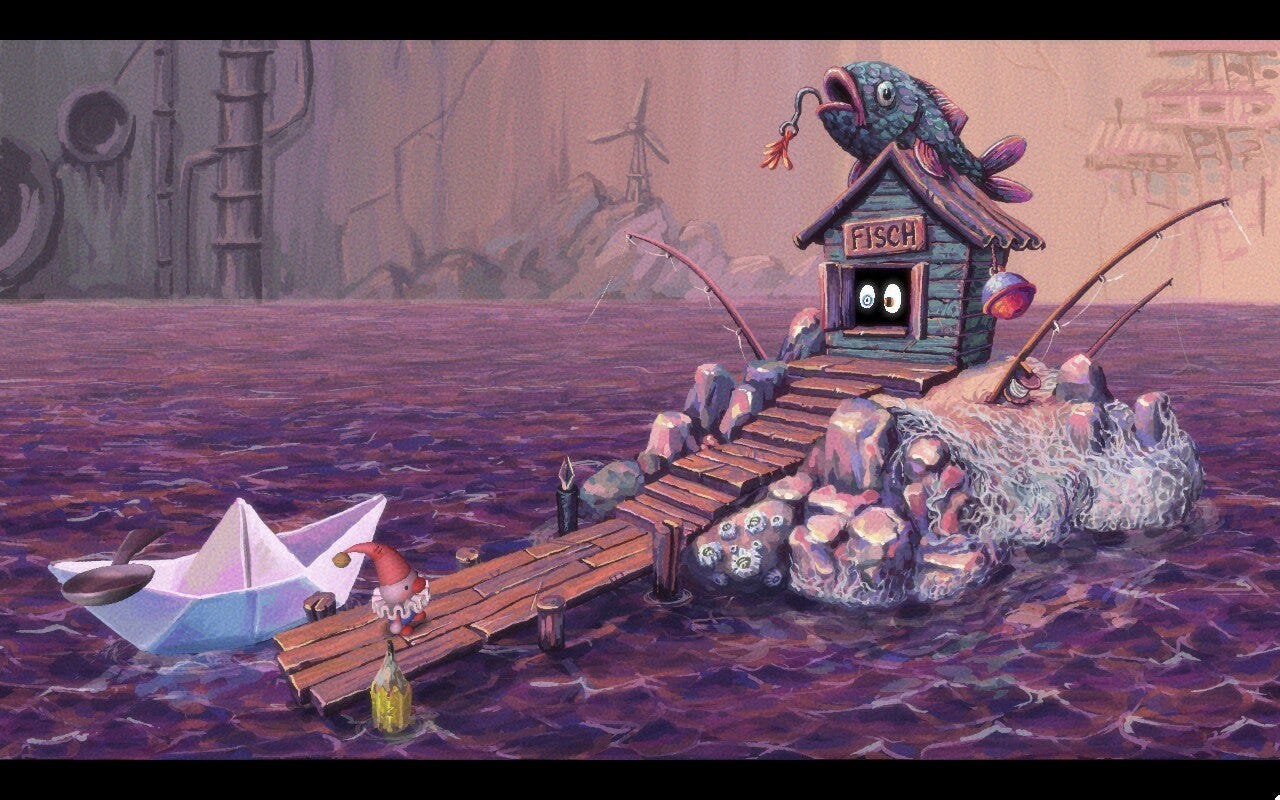
The game begins with your player character, the titular Poco, a small clown attempting to gain entry to the circus by completing a performance exam of sorts in front of a foreboding panel of towering, disembodied clown faces. Perhaps an allegory for the fact that Poco itself was a university thesis project that was required in order for the team to graduate. During the exam you’re immediately tasked to ace a series of mini games involving unicycling, balloon twisting and trumpeting. Without having any knowledge of how the mini games work, you promptly fail the exam and are unceremoniously dropped through a trapdoor into the Below World, a scrapheap inhabited by other undesirables and discarded detritus.
The art style is immediately striking with 3D, almost Claymation-like characters (definitely gave me some Neverhood vibes) layered on top of 2D hand-drawn watercolour backgrounds. Poco is bright, colourful and immediately inviting, including in its sound design and animation with Poco’s bell hat clinking and chiming as he bops and bounces along. The characters you meet along the way are equally colourful; a set of five siblings with designs based on the five senses who each help Poco attain a piece of a rocket ship that will help him ascend from the Below World back to the circus. There’s an endearing story that underlines proceedings; a group of siblings reuniting after growing apart and becoming indifferent to one another over the years; but there’s also a lot of dark humour to be found throughout the ninety-minute experience, especially with the ‘bad’ ending and a worm character you can interact with. These moments of macabre are unexpected but had me laughing out loud, often in shock.
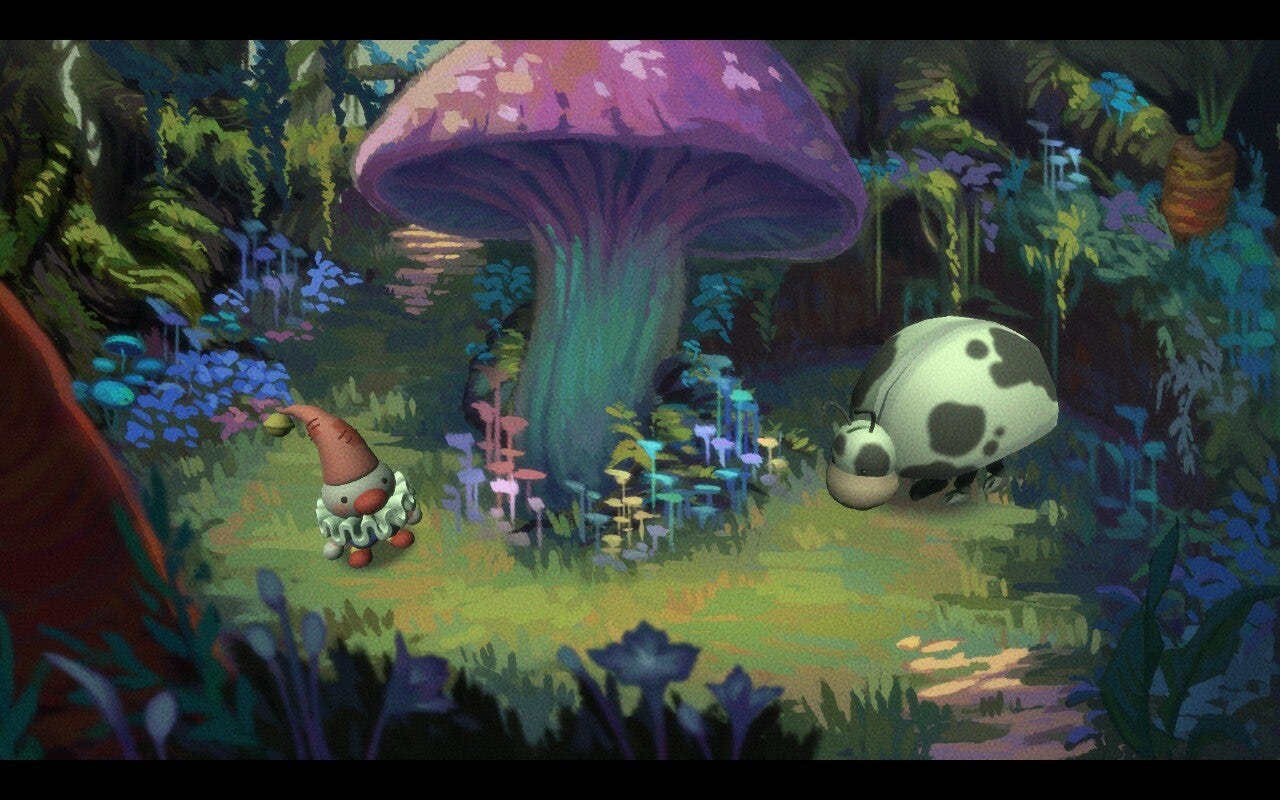
The gameplay is nothing revolutionary and is what you’d expect from a point and click adventure, which is essentially just a list of fetch quests. Although obtuse old school point and click games are my safe haven, Poco circumvents a lot of the frustrations found in those games of yore by simplifying the experience. You have an inventory but are not tasked with combining or dragging and dropping items onto interactable objects in the world. There are only a few interactable elements per screen and these are identified by your cursor; a cute little white glove that wiggles its fingers once it hovers over an interactable object. Sometimes it’s a bit tricky to discern what objects are interactable or retrievable and there’s a bit of pixel hunting to be done but not to the frustrating effect of most point and click adventures. Once you’ve clicked on an interactable item, your inventory will automatically pop up and you’re asked to choose an item that does the desired task such as finding a suitable item that can cut through vines or an item that can be used as an oar for a boat. Yes, there is trial and error and you can cycle through your entire inventory and solve puzzles by attrition but usually the solution is quite straight forward so you’re not having to do much guesswork. No chicken pulleys here.
There are some nice touches and quality of life mechanics (such as double clicking to run or an option in the menu to auto-run) that even veteran developers often overlook, which is what impresses me the most about Poco. It’s clear that a lot of care and attention went into making it a frustration-free experience. There a few mini games scattered throughout the game that might be irksome for some but I didn’t find them too laborious, especially as they made sense within the context of the game as they are the same mini games that you failed in the initial performance exam. Despite him caving under the pressure of the performance exam, I found it endearing to see Poco use the skills he had all along to overcome real-world hurdles on his quest.
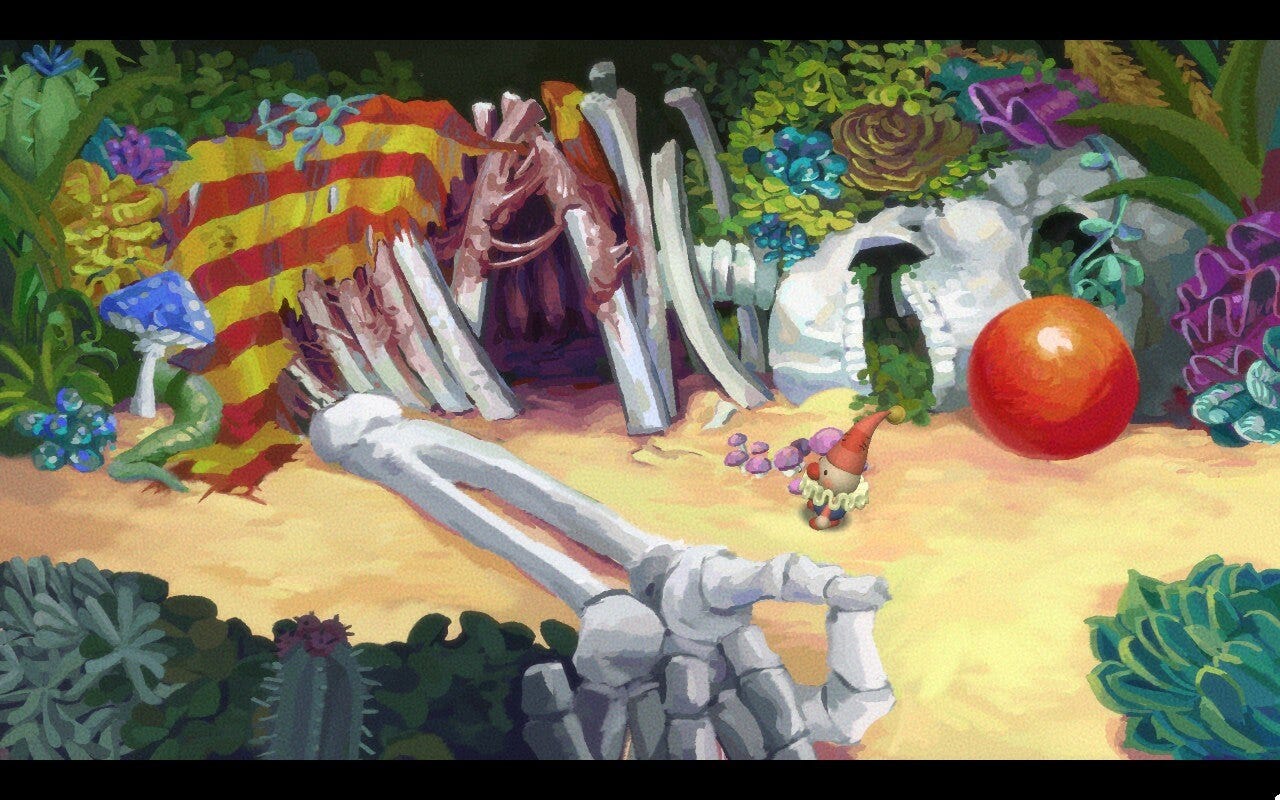
Poco makes me hopeful for the future of point and click adventure games. A genre that was almost lost to obscurity in the early 2000s due to an ill-advised pursuit of clunky 3D graphics and the waning patience of an audience for obtuse puzzles is, fortunately, still alive and well today and Poco proves you can smooth down the rough edges whilst still remaining true to the original formula. If it were up to me those students would have graduated with a distinction. What a gem.